Results
Transient Lunar Phenomena and Anomalous Lunar Events
Introduction
For as long as people have watched the Moon through telescopes, they have occasionally reported something brief and out of place: a flash, a glow, a patch of color or haze that fades within seconds or minutes. These reports are grouped under the name Transient Lunar Phenomena, or TLP. They are different from the steady, deliberate light display we ask for in our message, but they are part of the same big question: does anything ever change on the surface of the Moon, and if so, what?
This page is an open invitation to look at the real data and decide for yourself. We are not here to debunk anything, and we are not here to convince you of anything either. Our goal is to put the actual observations in front of you, give you simple tools to explore them, and let you watch for patterns as new data arrives. Think of it as a detective's workbench. The clues are real, the tools are yours, and the case is open.
One thing is worth saying up front, because it shapes everything below. Nearly all of these brief flashes are attributed to small meteoroids hitting the Moon, and that is a perfectly reasonable explanation for most of them. But "attributed" is the key word. A telescope records a point of light at a place and a time, in one or two colors, lasting a fraction of a second. The conclusion that it was a rock is an interpretation of that measurement, not something the measurement states directly. Keeping that distinction in mind is what makes this a science project rather than a story.
A good experiment needs something to compare against. Our group transmissions began on March 6, 2025, so we split every flash into two groups by when it was recorded.
- Control data is everything recorded before transmissions began: all 420 flashes in NASA's catalog (2005 to 2020) plus 195 NELIOTA flashes (2017 to 2023), 615 in all. This is our reference picture of what normal lunar flash activity looks like, with no transmissions involved. It is the yardstick.
- Experiment data is everything recorded since transmissions began: the 20 NELIOTA flashes from August 2025 onward. These are the flashes that could, in principle, show any effect of the transmissions.
Data
Our main page notes that several lunar flashes have been recorded close in time to our scheduled transmissions, which happen on the day of each first-quarter and last-quarter (half) moon. Here we look at exactly which flashes those are.
The six recent flashes that first caught our eye
When we first compared the NELIOTA archive against our 2025 and early-2026 transmission dates, six flashes stood out because each one landed within about half a day of a transmission, at the bright edge of the half moon. They are highlighted in gold throughout this page. All six are experiment data: they were recorded after transmissions began, which is exactly why they caught our attention.
| UT date | UT time | Offset (days) | Illum % | R mag | I mag | R − I (color) | Duration (s) | Lon | Lat | Images (R / I) |
|---|---|---|---|---|---|---|---|---|---|---|
| 2025-09-14 | 23:56:16 | +0.055 | 49.4 | 8.34 | 7.54 | 0.80 | 0.165 | +72.0 | +6.0 | 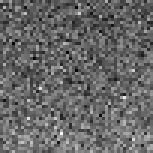 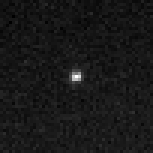 |
| 2025-11-13 | 02:21:24 | +0.095 | 49.0 | 10.86 | 8.81 | 2.05 | 0.066 | +70.0 | +9.0 | 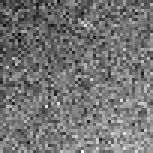 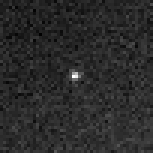 |
| 2025-11-13 | 03:10:06 | +0.129 | 48.6 | 10.04 | 8.47 | 1.57 | 0.099 | +44.0 | −5.0 | 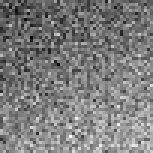 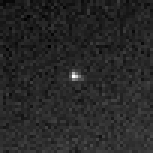 |
| 2025-10-28 | 18:32:01 | −0.466 | 45.1 | 7.58 | 6.33 | 1.25 | 0.066 | −18.0 | −18.0 | 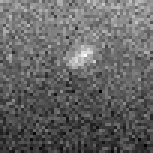 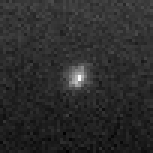 |
| 2025-08-17 | 00:28:48 | +0.608 | 43.5 | 10.25 | 9.24 | 1.01 | 0.066 | +54.6 | −7.9 | 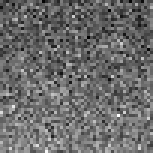 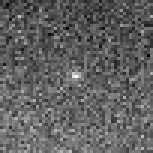 |
| 2026-02-23 | 17:58:20 | −0.612 | 43.5 | 9.55 | 7.21 | 2.34 | 0.099 | −17.5 | +15.4 | 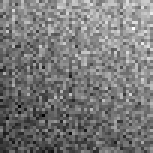 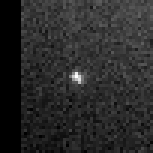 |
Every NELIOTA flash is measured in two colors, R (red) and I (near-infrared). A smaller R − I means a bluer, hotter flash; a larger R − I means a redder, cooler one. The full record for each detection also includes the measurement errors, the number of video frames in each band, the airmass, and the expert classification (all in the downloadable files in the Appendix).
The two flashes on November 13, 2025 are especially eye-catching: two separate events within about an hour of each other, both within a few hours of the same transmission. We come back to that pair in the Analysis section below.
The rest of the archive
The six above are not the whole story, and that is exactly the point of giving you the full data. NELIOTA has recorded 215 confirmed flashes between 2017 and 2026, and NASA's catalog adds 420 more from 2005 to 2020. Most of these are control data, recorded before transmissions began, and that is what makes them useful: they tell us how often a flash lands near a transmission date by chance alone. The answer is, fairly often. Thirty of the NELIOTA flashes fall within one day of a transmission, and most of those are control-era. Some of the older control flashes land just as close as the experiment-era recent six do; for example, two control flashes on October 13, 2017 were each within about four hours of a transmission. When you sort the complete archive by closeness to a transmission, the recent cluster stops looking unique. That is the whole value of having a control group, and the tools below let you see it for yourself.
Analysis
1. Map the flashes and toggle them on and off
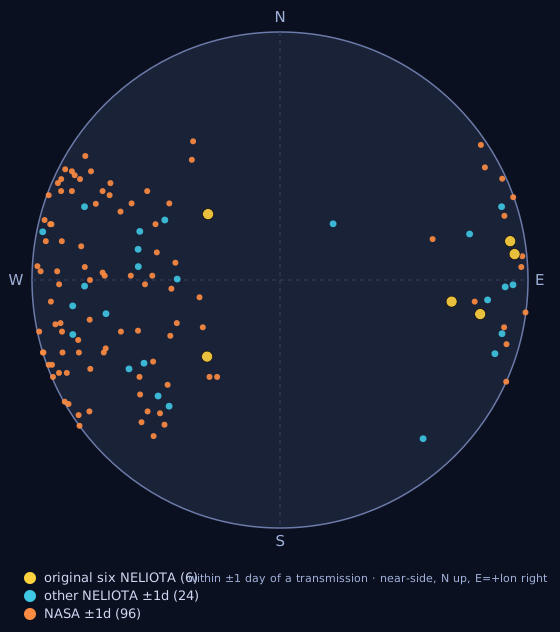
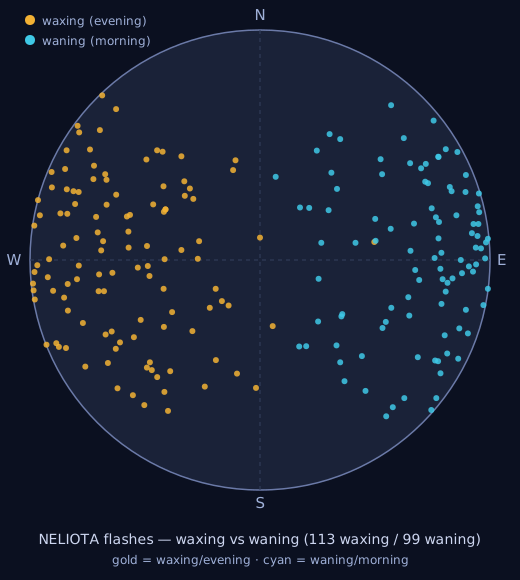
The map below shows where on the Moon each recorded flash occurred (its selenographic longitude and latitude), drawn as you would see the near side from Earth: north up, lunar east to the right. Use the preset buttons to highlight subsets, or scroll the table underneath and check individual flashes on and off. Open rings are control data; solid dots are experiment data. Try the Control and Experiment buttons to see each group on its own. Brighter NELIOTA flashes are drawn larger. Hover over any point for its details and its era.
Lunar flash map
Other:
| Show | Source | Era | Date | Time | Offset | Illum | R | Dur | Lon | Lat |
|---|
2. Color versus duration: impact, or something unusual?
This is where the "attributed to a meteoroid" idea can actually be tested. A real impact flash is incandescent: it is the glow of rock and soil heated to thousands of degrees by the impact, and then cooling. Two things follow. First, hotter flashes look bluer and cooler flashes look redder, which is why NELIOTA measures every flash in two colors (its R − I color index). Second, a simple impact flash is brief, usually a fraction of a second, and fades smoothly. A flash that is unusually long, or whose color does not fit the cooling curve, is the kind of thing worth a second look. The plot below puts every two-color NELIOTA flash on those two axes. Here the control data earns its keep: the open rings show the normal spread of color and duration for ordinary flashes, and the question for each solid (experiment) point is simply whether it sits inside that normal cloud or off on its own. So far they sit inside it. Watch the edges.
NELIOTA flash color (R − I) versus duration
3. When did the flashes happen, relative to a transmission?
Each flash has an offset: the signed number of days between it and the nearest transmission (negative means before, positive means after). This is the clearest control-versus-experiment picture on the page. The white dashed line marks March 2025, when transmissions began: everything to its left is control data (open rings), everything to its right is experiment data (solid dots). If transmissions pulled flashes toward the schedule, the solid points on the right would hug the gold zero line more tightly than the open points on the left. They do not. Both sides fill the whole range in much the same way, which is the visual version of the statistical result on our main page (the rate within one day of a transmission, about 14 percent, matches what random timing alone produces, about 13.5 percent). The recent six sit near zero, but so do scattered control flashes from every earlier year.
Offset to nearest transmission, by year
4. The November 13, 2025 pair
The two flashes recorded within an hour of each other on November 13, 2025 are the single most interesting feature in the recent data, simply because successive flashes close in time are uncommon. On the map (use the "recent six" preset and hover) they land at different places, longitude +70 and +44, latitude +9 and −5, so they are not a single event seen twice. Two genuinely separate impacts an hour apart is unremarkable over a busy meteoroid night, but it is exactly the kind of detail a citizen scientist should flag and keep watching, because a repeat of that signature near a future transmission would raise the stakes. New NELIOTA data near each transmission is the place to look.
5. Add your own observation
This is the heart of the page. As fresh flashes are recorded, you can fold them straight into the analysis above. We do part of the work for you automatically, and you can also enter any flash by hand.
Flashes not in our archive
The plots above are built from a fixed archive of flashes recorded through May 2026. Our site checks NELIOTA automatically around each transmission and lists any newer flashes here. Every flash in this table is experiment data (it was recorded after transmissions began), so each one is a fresh test against the control baseline. Tick a flash to add it to the map and the plots above, and watch where it lands relative to the control cloud.
Checking for new flashes…
Check a flash by hand
Enter any flash's UT date and time and the page computes, in your browser, how close it falls to the nearest transmission and how illuminated the Moon was, using the same lunar-phase math the site's schedule runs on. Add its longitude and latitude to drop it on the map in pink.
The pink marker is drawn on the lunar map in section 1 above. Selenographic longitude and latitude for each NELIOTA flash are listed on its event page in the NELIOTA archive.
Future Work: be the next observer
Everything on this page gets stronger with more data, and more data arrives on a schedule. NELIOTA typically publishes new detections within a few days of an observation, and it observes on most clear nights when the Moon's dark side is favorably placed, which is the same part of the lunar cycle in which we transmit. Here is how to take part:
- Watch the releases. After each transmission, check the NELIOTA archive for new flashes near that date.
- Run them through the tool. Use the "Add your own observation" box above to compute each new flash's offset and illumination, and plot it on the map.
- Look for repeats of a signature. An unusually long flash, an odd color, or a close pair like November 13, 2025 landing again near a transmission is the kind of thing that would move this from coincidence toward a pattern.
- Tell us what you find. If you spot something, use the contact form on the main site and describe it. We analyze what comes in and report anything interesting.
A scientifically robust statement about any correlation between our transmissions and these flashes would need two things we do not have yet: the telescopes' exposure records, so flashes can be turned into a true rate per hour of watching at each lunar phase, and many more transmission cycles to build the sample. Both accumulate with time. You can be part of building them.
Anomalous lunar events in the released government files
In 2026 the U.S. Department of War began releasing previously classified files on Unidentified Anomalous Phenomena through a program it calls PURSUE, posting them in batches to war.gov/ufo. Several of the released items concern the Moon directly, and they are worth knowing about because the same NELIOTA and NASA tools above are exactly what you would use to tell an ordinary impact flash from something that does not fit.
- Apollo 12 photographs (first release, May 2026). Images taken from the lunar surface show several faint colored dots in the black sky, including a tight formation of three lights in a triangle. The official assessment is that these are most likely blemishes in the film of the era. The photographs are in the released set so you can look and, as the Department put it, make up your own mind.
- Apollo 17 flashing object. Commander Eugene Cernan and his crew reported a rhythmically "flashing object" some miles from their capsule; Cernan's own guess was a rotating panel from their Saturn rocket. The transcript and debrief memos are included.
- Apollo 16 debriefing audio (third release, June 2026). The third batch included NASA audio, among it clips from an Apollo 16 scientific debriefing. Some commentators have read remarks in that material as referring to a structure on the Moon. We mention it as a reported reading of the audio, not as an established fact; the recording is public, and you can listen and judge.
None of this is proof of anything, and we are not presenting it as proof. The point is the method. A flash that is just a meteoroid will sit comfortably on the color-and-duration plot above and will scatter randomly against the transmission schedule. Something that does not, that is bright and long and oddly colored, or that clusters where chance says it should not, is what would justify a closer look. The data and the tools to make that distinction are on this page.
Appendix: the full data sets
These are the complete data sets behind everything above, free to download and re-use. The interactive map and plots on this page use the confirmed NELIOTA flashes plus the NASA catalog.
Control versus experiment. To use these files the way the page does, split them by date at 2025-03-06, the day transmissions began. Everything before that date is control data (all 420 NASA flashes and 195 NELIOTA flashes, 615 in total) and shows the normal background. Everything on or after that date is experiment data (20 NELIOTA flashes so far) and is what the transmissions could affect. A genuine effect would show up as the experiment data behaving differently from the control data; so far it does not.
- neliota_master.csv — all 340 NELIOTA detections (215 confirmed + 125 suspected), 2017–2026, with two-color photometry, duration, and selenographic coordinates. Confirmed events also carry the NELIOTA
event_idand the Moon'saltitude/azimuth, and each has actual R-band and I-band detection images (shown in the Data and Analysis sections; hover any NELIOTA point on the map above). - nasa_master.csv — 420 flashes from NASA's lunar impact catalog, 2005–2020.
- combined_master.csv — the confirmed NELIOTA flashes and the NASA catalog merged into one file (635 events).
- tlp_new.json — flashes recorded after this page's built-in archive (newest archived flash: 2026-05-21), refreshed automatically around each transmission. These also appear as the "Flashes not in our archive" table in the Add your own observation section, where you can tick each one into the plots.
Column key for the combined file: src (NELIOTA or NASA), date and time (UT), lon and lat (selenographic degrees, east and north positive), illum (Moon illuminated fraction, percent), offset (signed days to the nearest transmission). Primary sources: the NELIOTA archive (National Observatory of Athens) and NASA Marshall Space Flight Center's lunar impact monitoring program. Suspected NELIOTA detections carry a placeholder R magnitude and should be treated with care.